


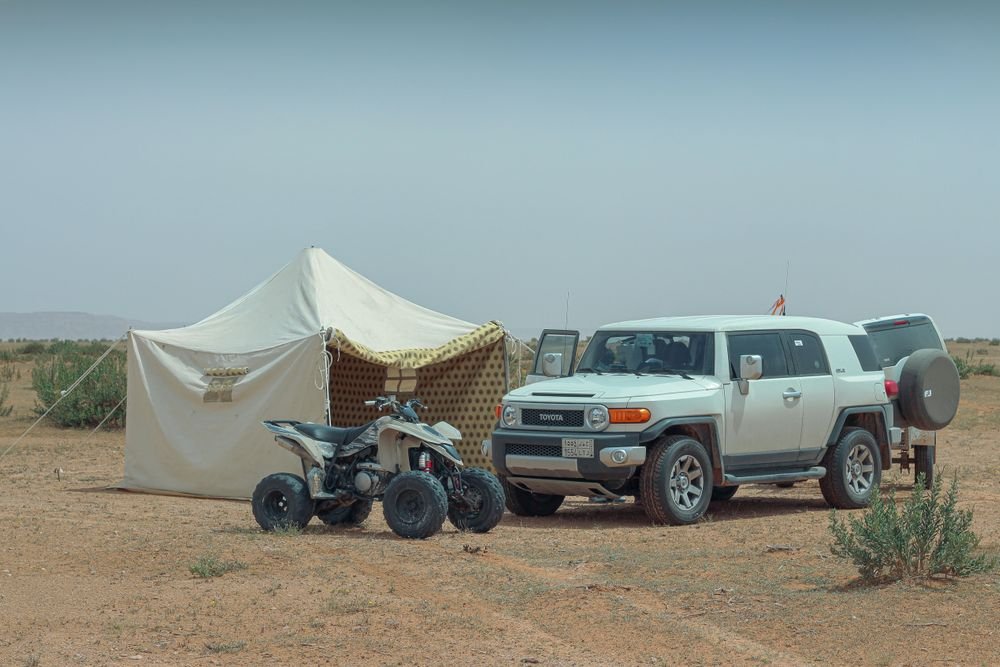
The Toyota FJ Cruiser had a loyal fanbase, strong off-road credentials, and a look unlike anything else on the road. People loved it. Yet Toyota quietly ended production — first in the U.S. in 2014, then globally in 2022. So what actually happened?
The answer isn’t one simple thing. It came down to a mix of falling sales, tightening fuel economy rules, and a major shift in what most car buyers actually wanted. Here’s a clear breakdown of each factor.
A Quick Look at the FJ Cruiser’s Run
Toyota launched the FJ Cruiser in 2006 as a modern take on the classic FJ40 Land Cruiser. It had retro styling, serious off-road hardware, and a body-on-frame build. For off-road enthusiasts, it was hard to argue with.
In the U.S., Toyota sold the FJ from the 2006 through 2014 model years. After that, U.S. sales stopped. But production didn’t end worldwide — Toyota kept building FJs for select markets including the Middle East, South Africa, and the Philippines.
Japan’s production wound down around 2017 to 2018. The final global production ended in December 2022. To mark the occasion, Toyota sold a limited “Final Edition” — roughly 1,000 units — in the Middle East, finished in a special beige color with unique trim. So when people say the FJ was discontinued in 2014, that’s only partly right. It took nearly another decade to fully disappear.
Sales Dropped and Never Fully Recovered
Early FJ sales were solid. The truck was new, it looked different from everything else, and off-road buyers were excited. But the 2008 recession changed things fast.
Specialty vehicles with high fuel costs took a big hit during that period. FJ sales fell sharply and never really bounced back to their earlier levels. By its final year in the U.S., Toyota was selling around 11,700 FJs annually. That’s not a disaster, but it’s also not enough to justify keeping an aging platform alive — especially when you compare it to what vehicles like the RAV4 or Highlander were moving at the same time.
Those mainstream SUVs were selling hundreds of thousands of units per year. The FJ, at roughly 11,000 to 14,000 units near the end, was a small fraction of that. Low volume makes it very hard to justify the cost of a full redesign or major platform update. Toyota ran the numbers and the FJ didn’t make the cut.
Fuel Economy Rules Made It a Problem for Toyota’s Lineup
This part matters more than most people realize. In the U.S., federal CAFE (Corporate Average Fuel Economy) regulations don’t just measure each vehicle on its own — they require automakers to hit a fleet-wide average across everything they sell.
Think of it like a class grade average. If one student consistently drags the average down, the teacher eventually has to address it. The FJ’s 4.0-liter V6, body-on-frame construction, and off-road hardware made it one of the thirstier vehicles in Toyota’s lineup. Every FJ sold nudged Toyota’s fleet average in the wrong direction.
That created two problems. First, Toyota risked paying regulatory penalties. Second, Toyota had to work harder with other vehicles to compensate, which added cost and complexity. As CAFE targets increased over time, keeping a fuel-hungry niche vehicle in the lineup became harder to defend.
Similar emissions pressure was building in Japan, Europe, and parts of the Middle East over the same period. The regulatory environment globally was pushing automakers toward lighter, more efficient vehicles — not heavier, body-on-frame off-roaders.
To be fair, the FJ wasn’t uniquely terrible on fuel. But compared to the crossovers that were replacing traditional SUVs, it was noticeably worse. In a regulatory environment focused on averages, that gap mattered.
Mainstream Buyers Moved On to Crossovers
Beyond regulations, something bigger was happening in the market. Through the late 2000s and into the 2010s, most buyers moved away from body-on-frame SUVs toward car-based crossovers. The crossovers offered better fuel economy, more comfortable rides, easier entry and exit, and more practical cargo space.
Think of the FJ like a rugged hiking boot. It’s excellent on the trail, but most people spend their days on sidewalks. At some point, they stop buying hiking boots and start buying comfortable everyday shoes. That’s what happened with the broader SUV market.
A family looking at the FJ versus a RAV4 or a Highlander faced some real trade-offs. The FJ had rear-hinged back doors — what some call “suicide doors” — which were less convenient for loading kids or groceries. The rear visibility was poor due to thick pillars and small windows. Backing out of a driveway was genuinely harder than it needed to be. Cargo access was more limited than a standard hatchback-style SUV.
The RAV4, meanwhile, had four regular doors, better sightlines, easier cargo loading, and cost less to fuel up. For someone who wasn’t specifically shopping for an off-road vehicle, the choice was easy. And most buyers weren’t specifically shopping for an off-road vehicle.
The FJ’s Practical Drawbacks Narrowed Its Audience
The same features that made the FJ interesting also made it harder to live with day-to-day. The bold styling came with compromised rear and side visibility. The off-road-tuned suspension made highway driving feel more truck-like than most buyers wanted. The interior aged quickly, and by the early 2010s it was falling behind competitors in infotainment, safety tech, and materials quality.
None of these things bothered hardcore off-road enthusiasts. But they mattered a lot to mainstream buyers. And mainstream buyers are where the real sales volume lives.
The FJ was also built on a modified platform shared with the Land Cruiser Prado and 4Runner, with a unique body and custom off-road hardware. That made the vehicle more expensive to produce per unit. At low sales volumes, the per-unit economics got worse over time, not better.
Why Did It Keep Selling Overseas Until 2022?
This is a fair question. If sales were too low to sustain the model, why did Toyota keep building it for eight more years after the U.S. exit?
The answer is that demand patterns were different in markets like the Middle East and parts of Africa. In those regions, body-on-frame, high-clearance SUVs remained more popular because of road conditions, driving culture, and fuel prices. The regulatory pressure on fleet fuel economy was also less severe in some of those markets at the time.
Toyota kept building for those markets because there was enough demand to make it worthwhile on a smaller scale. But eventually, even that demand narrowed and emissions standards tightened globally. By December 2022, the math no longer worked anywhere.
What This Means for Current FJ Owners
If you own an FJ Cruiser, the discontinuation doesn’t mean you’re stuck with an orphaned vehicle. The 4.0-liter V6 is shared with the 4Runner and Tacoma, so engine parts are widely available and likely to stay that way. Toyota’s dealer network still services the FJ normally.
Resale values have held up unusually well. Used FJs often sell at a significant premium compared to similarly aged trucks, and clean low-mileage examples can command prices close to — or sometimes above — their original MSRP. Limited supply, a strong enthusiast community, and a reputation for durability have kept demand high.
For more practical automotive buying and ownership information, Ibizbyte covers a range of topics that can help you make smarter vehicle decisions.
The aftermarket for the FJ is also mature and well-stocked. Parts, lift kits, bumpers, and accessories are easy to find, partly because the platform shares so much with other Toyotas.
Was the FJ Cruiser a Failure?
Not really. Toyota sold the FJ for nearly a decade in the U.S. and almost two decades globally. It built a loyal community and carved out a genuine identity in the market. For a niche, specialty vehicle, that’s a reasonable outcome.
The discontinuation was a business decision, not a verdict on the vehicle’s quality. The FJ didn’t fit where the market and regulations were heading. That’s different from failing.
As for a comeback — nothing official has been announced. Toyota has shifted its focus toward the 4Runner, Land Cruiser, and electrified vehicles. Some speculation exists about a future rugged compact EV with FJ styling inspiration, but nothing confirmed. Don’t hold your breath based on rumors alone.
The Bottom Line
The Toyota FJ Cruiser was discontinued because of several problems hitting at once: sales that were too low to justify a redesign, fuel economy regulations that made a thirsty V6 off-roader a liability for Toyota’s fleet average, a broad consumer shift toward crossovers, and an aging design that couldn’t keep up with mainstream expectations.
Any one of those factors alone might not have killed it. Together, they made continuing the FJ impossible to justify financially. The vehicle was genuinely good at what it did — but what it did wasn’t what most buyers needed, and that gap only widened over time.
Read Also:
