


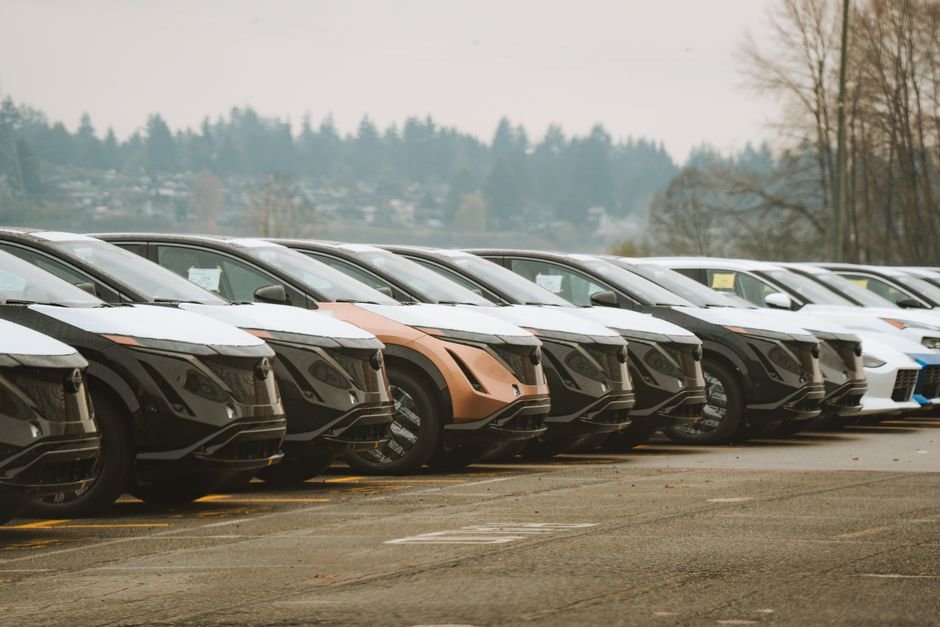
In February 2016, Toyota announced it was shutting down Scion — a brand it had spent over a decade building specifically to attract younger drivers. For many fans, the news came as a surprise. For Toyota insiders, it had been a long time coming.
This article covers why Scion was created, what went wrong, the exact timeline of its shutdown, what happened to the cars and their owners, and whether the brand could ever come back.
What Scion Was and Why Toyota Created It
Toyota launched Scion in the U.S. in 2003 after developing the concept around 2002. The goal was straightforward: attract younger, first-time car buyers who weren’t connecting with Toyota’s mainstream lineup.
At the time, Toyota had a solid reputation for reliability, but its image skewed older and conservative. Scion was meant to fix that by going in a completely different direction.
The brand leaned into urban culture, music events, and heavy customization options. It used a no-haggle pricing model with low margins — something quite different from the typical dealership experience. Models like the xB (a boxy, unconventional hatchback) and the tC (a sporty coupe) were designed to look and feel unlike anything else Toyota sold.
Toyota gave Scion its own branding and dealer experience. The idea was to reach millennials and Gen Y buyers through a sub-brand that felt fresh and independent — not like something your parents drove.
Scion’s Sales Peak and the Long Slide That Followed
Scion had real momentum in its early years. Sales peaked around 2006, and the brand had genuine cultural buzz around it. The xB in particular became something of a cult car in tuner and customization communities.
But after 2006, things started moving in the wrong direction. Sales declined year after year with no meaningful recovery.
By 2015 — the last full year the brand operated — Scion sold only about 56,167 vehicles across the entire United States. That number is hard to justify for a standalone brand with its own marketing budget, dealer training, and separate inventory systems.
Several things accelerated the decline. The 2007–2008 financial crisis hit hard. Scion’s original business model relied on short product cycles and aggressive low-margin pricing. That approach became unsustainable when the economy tightened and buyers pulled back.
At the same time, consumer tastes shifted. Shoppers who might have bought a quirky small car in 2005 were now looking at compact crossovers and SUVs by 2015. Scion had no real answer for that segment. The market moved, and Scion didn’t move with it.
The Specific Reasons Toyota Pulled the Plug on Scion
The discontinuation wasn’t caused by one single thing. Several problems stacked up over time until the brand simply couldn’t be justified anymore.
Sales Numbers That Didn’t Add Up
Selling around 56,000 cars per year sounds like a lot until you consider what it costs to maintain a separate brand. Scion had its own marketing campaigns, dealer training programs, and inventory pipelines. The revenue didn’t cover those costs, and the brand was losing money.
A Weak Brand Identity in a Crowded Market
Scion competed against cars like the Kia Soul, Honda Fit, and other small, affordable options — but it never carved out a clear advantage over any of them. Buyers could get similar value elsewhere without needing to seek out a Scion dealership specifically.
Younger Buyers Were Already Choosing Toyota
This is the part that made Scion’s existence hard to defend. Toyota’s own research showed that younger buyers — the exact demographic Scion was built to reach — were already buying Toyotas on their own. If the target audience doesn’t need the separate brand to convert them, the separate brand stops making sense.
Think of it like a coffee chain opening a “hip” offshoot specifically to attract college students, only to find those students keep coming to the main chain anyway. At that point, running the offshoot with its own logo, staff, and marketing becomes an expensive redundancy.
No Answer for the Crossover Market
By the mid-2010s, compact crossovers were the fastest-growing segment in the U.S. car market. Toyota had the RAV4. Scion had nothing comparable. The brand was built around small cars and coupes at exactly the moment buyers were moving away from them.
The Cost of Running a Sub-Brand
Maintaining Scion meant duplicate costs across the board — separate marketing, separate dealer experience, separate branding. For a brand doing modest volume, those costs ate into whatever profit margin existed. Toyota and Lexus were performing well. Scion was an ongoing expense that didn’t pull its weight.
The Official Timeline — When and How Scion Was Shut Down
On February 3, 2016, Toyota officially announced that Scion would be phased out after the 2016 model year. Jim Lentz, CEO of Toyota North America, made the announcement directly.
Lentz framed it as a business decision rather than a public admission of failure. Toyota’s official line was that Scion had been an “experiment” — and that the experiment had run its course because younger buyers no longer needed a separate brand to find their way to Toyota.
The brand was operationally wound down in August 2016, at the start of the 2017 model year. From that point, Scion stopped existing as a brand in any functional sense.
What Happened to the Cars and the Owners
Toyota didn’t just walk away from the existing lineup. It kept the strongest models and rebadged them under the Toyota name:
- The Scion FR-S became the Toyota 86
- The Scion iA became the Toyota Yaris iA
- The Scion iM became the Toyota Corolla iM
- The C-HR concept moved forward as the Toyota C-HR
The tC coupe was discontinued entirely after a final “Release Series” edition. Earlier models like the xA and xB had already left production before the brand shut down.
For existing Scion owners, the transition was smooth in practical terms. Toyota continued warranty coverage, financing, and parts support through its dealer network. An owner with a Scion iA simply started visiting Toyota dealerships instead — same service, different sign on the door.
For readers looking for practical guidance on car ownership decisions and brand transitions like this, Ibizbyte covers topics that help consumers make sense of these kinds of changes.
Toyota’s Version of Events vs. What the Numbers Show
Toyota was careful about how it described the shutdown publicly. The official position was that Scion wasn’t a failure — it was a successful experiment that brought young buyers into the Toyota ecosystem, and now those buyers didn’t need a separate entry point.
That framing has some truth to it. Scion did produce well-regarded cars, particularly the FR-S, which helped Toyota inject some genuine sportiness into its lineup. The tuner and enthusiast communities around models like the xB and tC are still active today in the used car market.
But outside analysts were more direct. The sales decline was real. The brand lost money. And the attempt to capture millennials in large numbers didn’t succeed the way Toyota had hoped. Both things can be true at once — Scion had genuine moments and produced good cars, but it also didn’t achieve its core financial and demographic goals.
Could Scion Ever Come Back?
As of now, there is no indication Toyota plans to revive the Scion brand. Sources up through 2021 specifically note no signals of a comeback.
It’s easy to imagine arguments for a revival — a small, affordable, EV-based youth brand, for example. But Toyota has been building on its main nameplate instead, and launching a new sub-brand comes with all the costs that killed Scion in the first place.
The more likely path is what Toyota is already doing: making its mainstream lineup appealing enough that younger buyers choose it directly, which is exactly what was happening before Scion shut down.
What the Scion Story Actually Tells Us
Scion’s rise and fall is a useful case study in what happens when a brand strategy runs into market reality. The idea made sense in 2002 — Toyota’s image was aging, and younger buyers needed a reason to look Toyota’s way. Scion gave them one, at least for a while.
But markets shift. The crossover segment exploded. The financial crisis changed buyer behavior. And Toyota’s core brand turned out to be more appealing to young drivers than the company originally assumed.
Maintaining a separate brand for a shrinking audience at a growing cost isn’t a strategy — it’s a liability. Toyota recognized that and made the call. The cars didn’t disappear; they just got Toyota badges. And the lessons from Scion almost certainly influenced how Toyota approached design, customization, and younger buyers in the years that followed.
If you owned a Scion, your car didn’t become worthless or unsupported. If you’re just curious about why it happened, now you know — it was a combination of declining sales, shifting tastes, duplicated costs, and a target audience that didn’t need a separate brand to buy a Toyota after all.
Read Also:
