


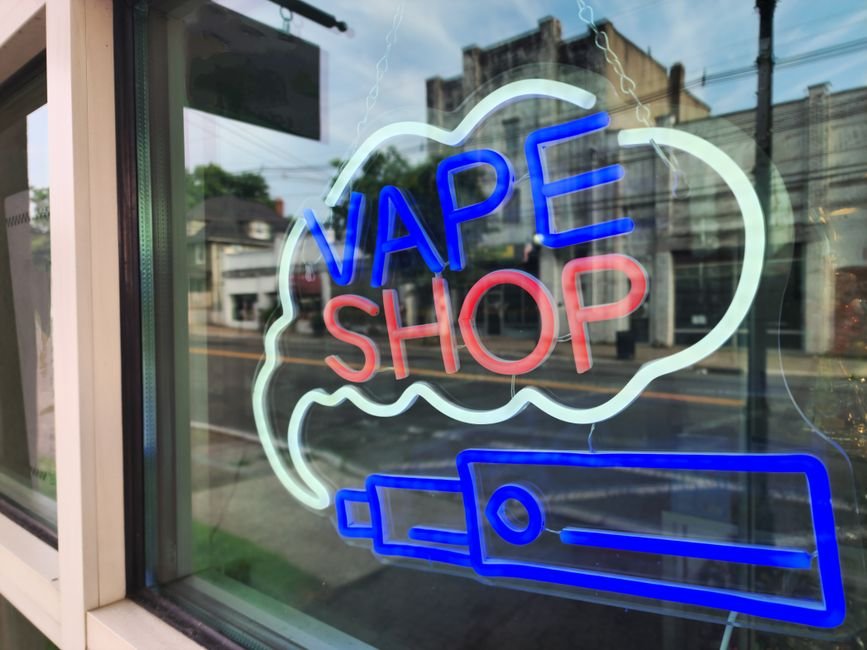
If you’ve walked into a vape shop recently and found zero RAZ products on the shelf, or searched online only to see “sold out” everywhere, it’s easy to assume the brand is gone for good. That assumption is understandable — but it’s not accurate. The full story involves FDA enforcement, import tariffs, state bans, and supply chain problems that hit all at once.
This article explains exactly what happened to RAZ vapes between 2024 and 2026, which models were renamed versus pulled, and what the brand’s actual status is right now.
RAZ Vapes Are Not Discontinued — Here Is What Actually Happened
Let’s clear this up first. RAZ has not shut down as a company. According to RAZ’s own 2026 FAQ, all five device lines plus a Zero Nicotine line are in active production. The brand is US-distributed and actively shipping as of 2026.
So why does it feel like RAZ disappeared? Because there’s a difference between a brand shutting down and a brand becoming hard to find. When products vanish from shelves, consumers naturally call it “discontinued.” But the cause here is regulatory pressure and logistics, not a company closing its doors.
There are also two types of discontinuation worth separating:
- SKU-level discontinuation — one specific model gets pulled or renamed.
- Brand-level shutdown — the company stops operating entirely.
RAZ has experienced the first kind in some cases. The second kind has not happened. RAZ’s own materials directly refute the shutdown rumor, noting that “going out of business” talk usually stems from SKU rotation, state-level restrictions, or counterfeit devices confusing customers.
The FDA Warning Letter and What It Did to Retail Supply
The single biggest regulatory event affecting RAZ was a warning letter the FDA sent on September 12, 2024, to FunCool Technology Co., Ltd, which does business as RAZ Vape.
The letter identified specific RAZ products — including the DC25000 Razzle Dazzle and several TN9000 flavors — as lacking the required premarket authorization, known as a PMTA (Premarket Tobacco Product Application). Without that authorization, those products are classified as unlawfully marketed under the Federal Food, Drug, and Cosmetic Act.
Here’s what that means in practice for store owners. A smoke shop that stocks unauthorized RAZ products is not just bending the rules — it’s potentially facing product seizures and fines. Many retailers simply stopped ordering RAZ as a precaution. The brand still existed; local shops just decided the legal risk wasn’t worth it.
Think of it this way: RAZ didn’t close, but the shelf space dried up because retailers pulled back. To customers, the result looked the same — empty shelves and “out of stock” pages everywhere.
It’s also worth noting that FDA enforcement in this area is primarily aimed at manufacturers and retailers, not individual consumers. But retailer risk is very real and very direct, which is why the warning letter had such a visible impact on availability.
Federal Seizures, Tariffs, and the 2025 Supply Collapse
The FDA warning letter was just the beginning. What happened in 2025 made the shortage much worse.
Seizures at a Massive Scale
In September 2025, federal agencies seized over $86 million worth of unapproved vape products. RAZ was included in those seizures. By the end of 2025, the total had reached $115 million across all brands. Scripps News reported that RAZ, Geek Bar, and Lost Mary were all caught up in this broader enforcement sweep.
When products are seized at the border or in warehouses, they don’t reach stores. That’s straightforward, but the scale of the 2025 seizures made it feel like a complete vanishing act.
Tariffs on Chinese Imports
RAZ disposables are manufactured in China. Tariff increases in 2025 pushed duties on Chinese imports above 100% in some cases. When it costs more than double to import a product, distribution slows down, prices go up, and some importers simply pause operations until things stabilize.
Customs holds, additional import documentation requirements for synthetic nicotine, and general shipping delays stacked on top of the tariff problem. The supply chain didn’t break, but it bent badly.
Battery Shortages and Panic Buying
There was another layer: a global lithium-ion battery shortage. Growing electric vehicle demand stretched battery lead times from roughly 8 weeks to 26 weeks for some suppliers. Devices like the RAZ LTX 25K and RX50K depend on these batteries. Longer lead times mean slower production, which means less product available to ship.
At the same time, rumors about flavor bans triggered panic buying. Consumers who heard that certain flavors might be restricted started buying in bulk, which drained existing inventory faster than it could be restocked. The combination of reduced supply and spiked demand made shelves bare almost overnight.
State Bans That Made RAZ Effectively Unavailable in Certain Regions
Beyond federal enforcement, individual states took their own action — and that created localized “discontinuation” experiences for consumers in specific places.
Texas banned Chinese-made vapes in June 2025. Since RAZ is manufactured in China, that ban directly removed it from Texas stores. Residents there had a straightforward experience: RAZ was simply gone.
Indiana tightened rules on disposables without proper approvals in July 2025, making it harder for retailers to legally stock RAZ products.
Florida prohibited any disposable vape that hadn’t received FDA approval, with enforcement starting in March 2025 and daily penalties for violations. Reddit threads from Florida users describe the confusion clearly — they assumed the brand was gone because no local shop would carry it.
A useful comparison: it’s like a movie that gets removed from one streaming service because of a licensing issue. The film still exists. The studio didn’t shut down. It just isn’t accessible where you’re looking. RAZ vapes are still in production, but depending on where you live, you may not be able to get them locally — and that regional absence gets reported as “discontinued.”
Specific Models: What Was Renamed and What Was Pulled
Some of the confusion around RAZ comes from product name changes that consumers misread as discontinuations.
The RAZ DC25000 was rebranded as the RAZ LTX 25K. Same hardware, same performance — only the name changed. If you searched for the DC25000 and couldn’t find it, that’s why. It wasn’t pulled; it was renamed. MiPod confirmed this clearly: no change in the device itself, just different branding on the packaging.
The TN9000 flavors were specifically named in the FDA warning letter as products lacking marketing authorization. Some retailers removed them out of caution, which is why those particular flavors became harder to find than others.
RAZ did return to the market in late 2025 with new models — the RAZ VUE 50K and RAZ RX50K — which is consistent with a brand that’s adapting to pressure, not shutting down.
Counterfeit Products Added to the Confusion
One more factor worth mentioning: counterfeit RAZ devices. Fake versions of popular vape brands are common, and when a counterfeit product fails or tastes off, people assume the real brand has declined in quality — or shut down entirely. RAZ’s own FAQ acknowledges this directly, pointing to counterfeit issues as one source of “going out of business” rumors.
If you bought what you thought was a RAZ product and it performed badly, there’s a real chance it wasn’t an authentic device at all.
What Is RAZ’s Status as of 2026?
Based on available information, RAZ is still operating. The brand’s FAQ confirms all five device lines are in production. New models were released in late 2025. The brand is actively shipping to US retailers in states where it can legally do so.
Availability varies significantly depending on where you live. In Texas, Florida, or Indiana, you may not find RAZ products in stores at all due to state law. In other states, availability depends on whether local retailers are willing to stock products that don’t yet have PMTA authorization.
Online availability also shifts with import cycles, tariff changes, and FDA enforcement activity. Sites like EightVape reported RAZ returning with new models after the 2025 disruption, which suggests the distribution network is recovering — slowly.
For anyone tracking news about vaping regulations and product availability, ibizbyte covers tech and consumer topics that intersect with regulatory developments worth following.
The Bottom Line
RAZ vapes are not discontinued in the traditional sense. The brand is still producing devices, shipping products, and releasing new models. What actually happened is a combination of events that hit the brand hard in a short window: an FDA warning letter in 2024, massive federal seizures in 2025, tariffs on Chinese imports, battery supply problems, and state-level bans that removed RAZ from entire regional markets.
If RAZ has disappeared from your local shop or your usual online store, the cause is almost certainly one of those factors — not a brand shutdown. Whether RAZ can fully recover and normalize its distribution depends on regulatory outcomes, PMTA proceedings, and whether tariff pressure eases. None of that is settled yet, and the situation is still evolving.
For now, the short answer to “why is RAZ discontinued?” is: it isn’t. It’s just very hard to find in a lot of places, and for reasons that have nothing to do with the company choosing to stop making it.
Read Also:
